
Live in five minutes, under your brand.
Choose a provider, pick markets from the list and set the rules; add a name, logo, colours and a custom domain, and go live from the partner portal. Builder fees come in from the first order.
A B2B2C stack for white-label trading platforms, built from the venues up. Every provider sits behind one SDK layer that handles orders, positions and accounts the same way. On it stand a studio for each asset class - perps, spot, predictions and real world assets - with neobank.studio beside them. Exchange templates, the SDK and the API turn that into clients: a template live in five minutes, or your own app on the API.

Choose a provider, pick markets from the list and set the rules; add a name, logo, colours and a custom domain, and go live from the partner portal. Builder fees come in from the first order.

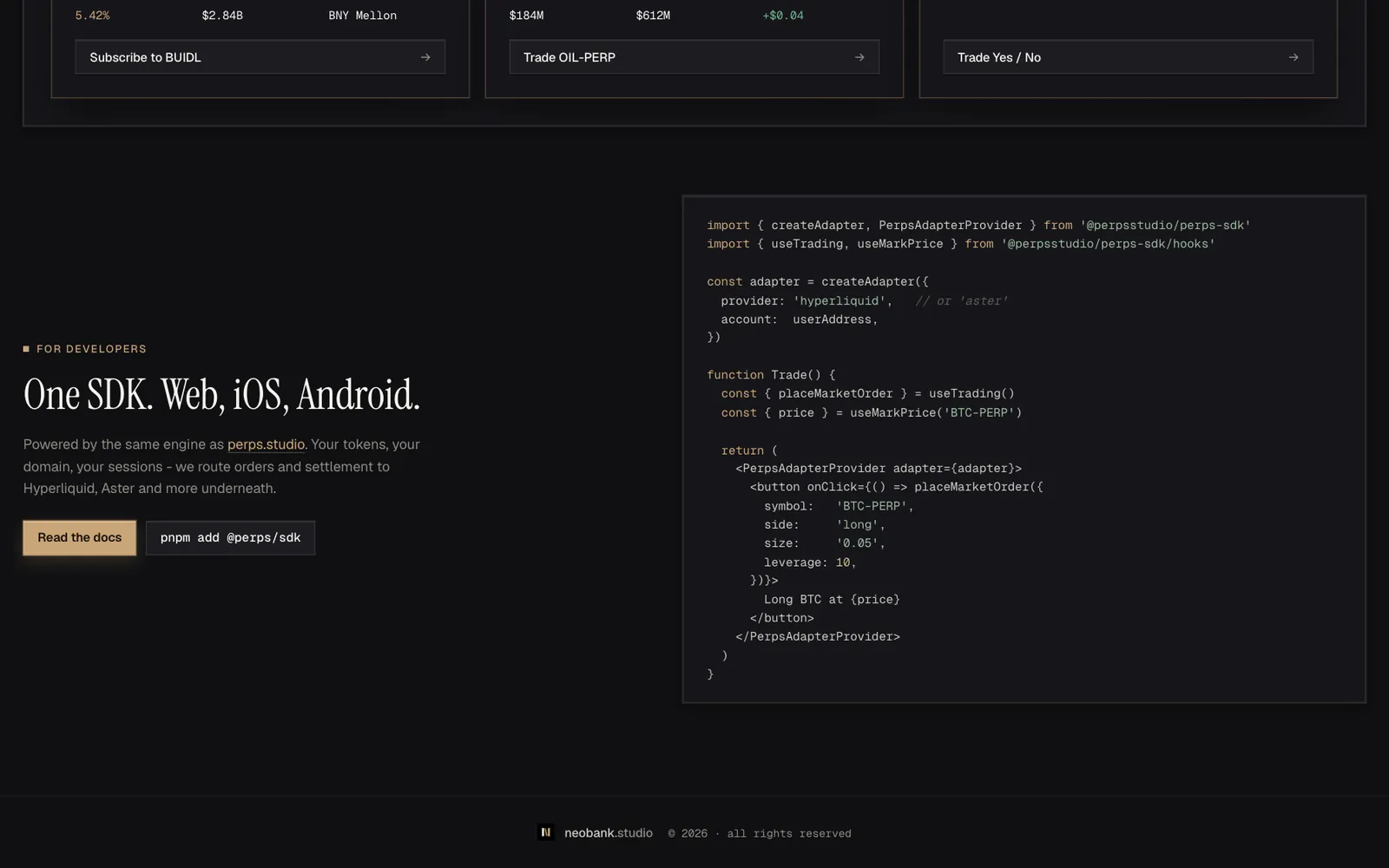
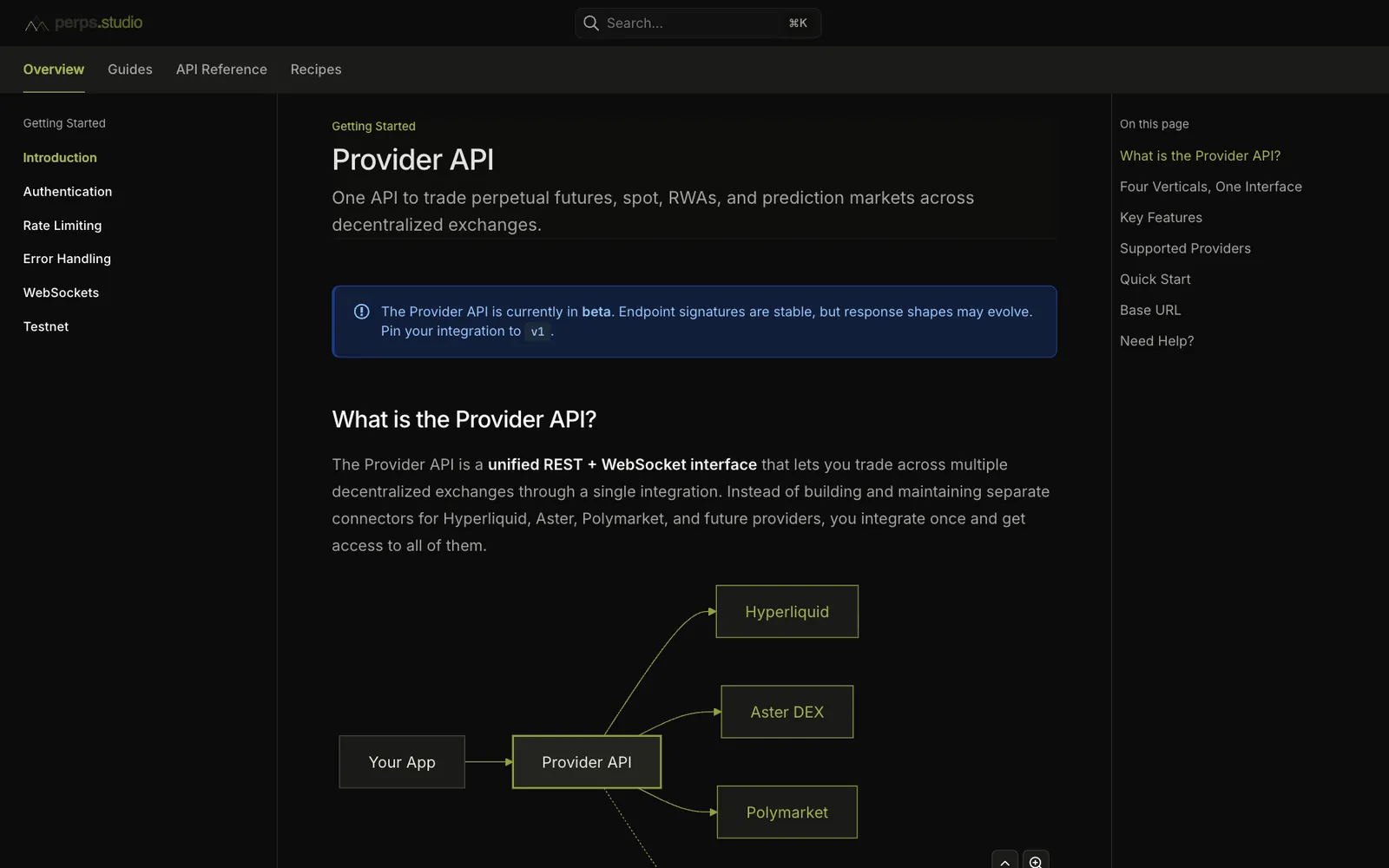
One interface to every surface the stack supports. Most of the demand came from brokers and platforms that already had an app and wanted one asset class or a few in it - not a template, a modular stack.

The same stack under every client: the template on the web, and your own builds on the SDK and API wherever your users are.
The partner portal runs the platform as a business: who resells it, who runs which exchange, who may change what, and a record of every change.
Runs every distributor, partner and exchange.
Resells with its own defaults - branding, fee tiers, risk, features and provider - up to a cap on partners.
A Starter, Growth or Enterprise tier, with the features it has access to.
Its provider, products, domain with SSL, branding and features.
Maker and taker fee tiers by volume; per exchange, max leverage, position size and open positions, liquidation penalty, insurance fund, auto-deleverage and a circuit breaker.
API keys with scoped permissions and an expiry, stored hashed; every change in an audit log, and a compliance view.
A subdomain or a custom domain with SSL, and the logo, colours, font and tagline of each exchange.
Open to the right conversations - a platform under your brand, a stack inside the one you run, or something with no name yet.